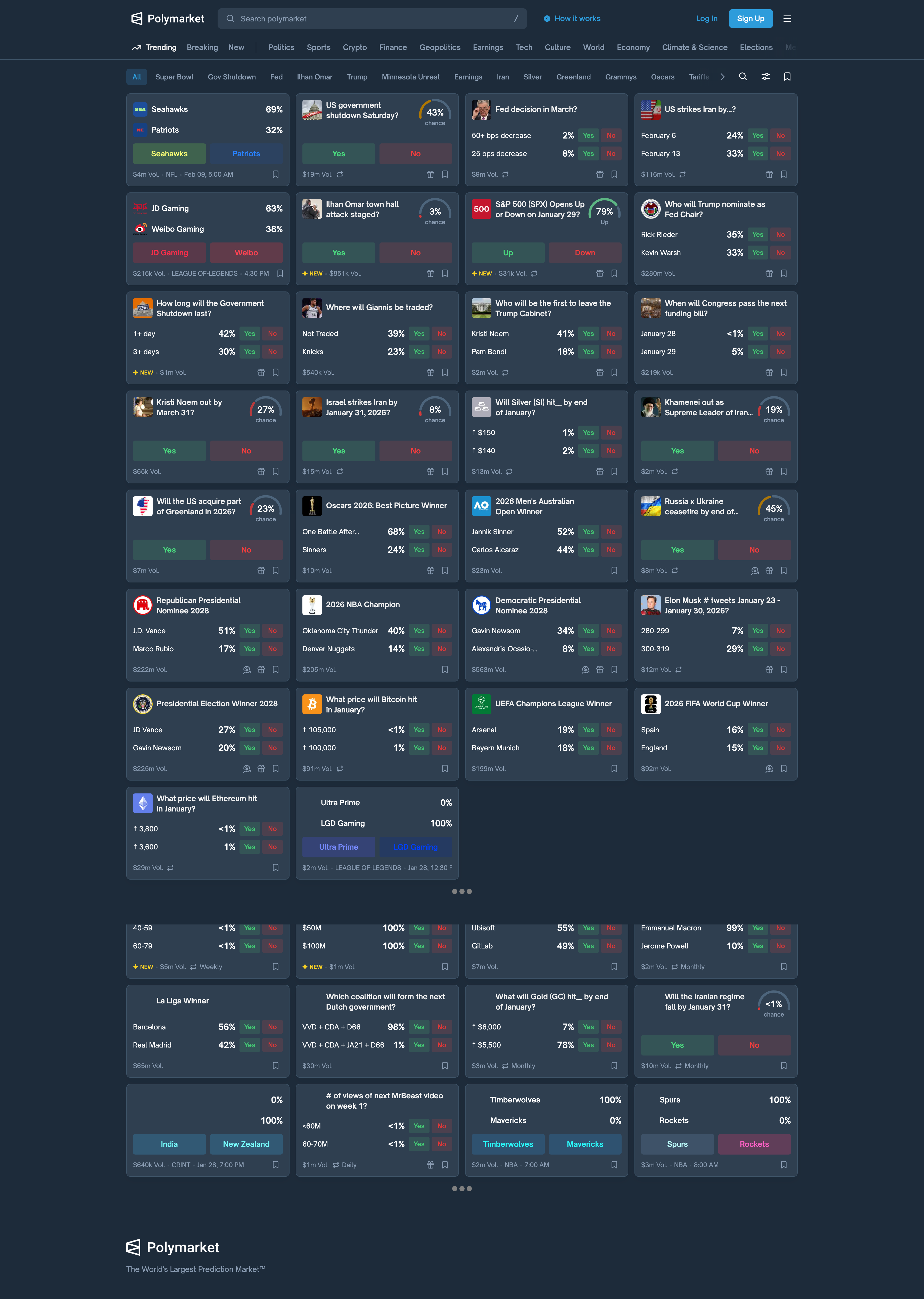
As the landscape of blockchain technology continues to evolve, the concept of prediction markets has emerged as a novel use case, combining the power of decentralized finance (DeFi) with real-world decision-making. One platform leading this charge is Polymarket, a decentralized prediction market where users can place bets on various outcomes of future events. This article will explore Polymarket in-depth, examining its unique features, underlying technology, governance model, use cases, and the potential ramifications for the future of trading and speculation.
Overview
Polymarket is a decentralized prediction market built on the Ethereum blockchain, designed for users to trade on the outcomes of events ranging from politics and COVID-19 statistics to sports and entertainment. Unlike traditional betting platforms or casinos, Polymarket allows users to buy and sell shares in the outcome of various events, creating a decentralized marketplace for information and predictions.
Core Mission
The primary mission of Polymarket is to empower individuals to make informed decisions based on collective knowledge and insights. The platform aims to provide a space for users to tap into the wisdom of crowds, enabling them to leverage diverse opinions and evaluate the likelihood of future events.
Key Features
Decentralized Architecture: Polymarket operates on the Ethereum blockchain, ensuring transparency and security while allowing for censorship-resistant trading.
User-Friendly Interface: The platform offers an intuitive interface that simplifies the process of creating markets, placing bets, and trading outcomes.
Token-Based System: Users can buy shares using USDC, a stablecoin pegged to the US dollar, facilitating transactions with minimal volatility.
Finality through Consensus: Outcomes are determined through a consensus mechanism, leveraging third-party data or decentralized oracle networks to ensure trustworthiness.
1. Blockchain Infrastructure
Polymarket is built on the Ethereum blockchain, which enables the platform to benefit from Ethereum’s established security, decentralized nature, and extensive network of users. Smart contracts govern every transaction on Polymarket, ensuring that user funds are held securely and that outcomes are executed automatically.
2. Smart Contracts
Smart contracts are self-executing agreements that operate on blockchain technology. In the context of Polymarket, smart contracts facilitate:
Market Creation: Users can create markets for a specific event, setting the parameters and outcomes.
Bet Settlement: Once an event concludes, the smart contract automatically distributes winnings based on the verified outcome.
3. Oracles for Data Verification
To determine the outcomes of events, Polymarket relies on decentralized oracles that pull data from trustworthy sources. These oracles ensure accuracy by cross-referencing various data inputs before finalizing outcomes.
4. Liquidity Protocol
Polymarket employs a liquidity protocol that maintains an order book, allowing users to trade shares of outcomes easily, enhancing the overall user experience. This liquidity ensures that users can enter and exit positions quickly and with minimal slippage.
1. Community-Driven Model
Polymarket embraces a community-driven governance approach that encourages user involvement in decision-making processes. This model fosters transparency and trust in the platform, as users feel more connected to the outcomes and changes made within the ecosystem.
2. Token Incentives
While Polymarket primarily uses USDC for transactions, the platform may introduce its own governance tokens in the future, granting holders voting rights on critical operational decisions, such as market parameters and fee structures.
3. Feedback Loops
Continuous community feedback is integral to Polymarket’s development. Users are encouraged to participate in discussions about features, enhancements, and potential changes, creating an environment of collaboration and shared growth.
1. Political Predictions
Polymarket has gained traction for political event predictions, such as election outcomes, policy decisions, and legislative actions. Users can bet on factors like:
Election Results: Engaging in trading based on political projections, such as presidential elections and congressional races.
Legislation Passage: Speculating on the likelihood of specific bills or amendments being enacted.
2. Financial Markets
Investors can explore predictions related to financial events, such as:
Stock Price Movements: Betting on the future performance of stocks or indices based on market trends and news.
Economic Indicators: Trading on predictions regarding economic events such as interest rate changes or unemployment statistics.
3. Entertainment and Sports
Polymarket can also facilitate market predictions in the realms of entertainment and sports, allowing users to bet on outcomes such as:
Award Shows: Speculating on potential winners at events like the Oscars or Grammys.
Game Outcomes: Betting on the results of sporting matches, tournaments, or championship events.
4. COVID-19 and Public Health Questions
Polymarket has carved a niche for itself in addressing questions related to health crises, such as:
Vaccination Rates: Trading predictions on vaccination milestones or case numbers in specific regions.
Health Policies: Speculating on governmental health responses.
5. Pop Culture and Current Events
Users can engage with markets on various pop culture events, such as:
Celebrity News: Betting on the likelihood of celebrity marriages, divorces, or scandals.
Streaming Releases: Predicting the success of new films and shows on popular platforms.
1. Decentralization
Polymarket’s decentralized architecture ensures that no single entity can control the platform, creating a transparent environment for users to trade freely. This decentralization minimizes the risk of fraud or manipulation.
2. Access to Collective Wisdom
By aggregating predictions from a large user base, Polymarket taps into the “wisdom of crowds,” allowing users to benefit from diverse insights and opinions.
3. User Control
Polymarket offers users full control over their funds, allowing them to manage their investments without relying on third-party intermediaries.
4. Potential for High Returns
The nature of prediction markets allows for potential high returns, especially for users who can accurately assess the likelihood of various outcomes.
5. Community Engagement
Polymarket fosters a vibrant community where users can discuss predictions and share information, further enhancing their decision-making capabilities.
1. Regulatory Landscape
Prediction markets have faced scrutiny from regulators in various jurisdictions due to their gambling-like nature. As a result, Polymarket must navigate the legal landscape carefully to ensure compliance while maintaining its decentralized ethos.
2. Market Manipulation Risks
Like any trading platform, Polymarket is susceptible to market manipulation, where users may attempt to influence outcomes to their advantage. Implementing robust monitoring mechanisms will be essential for minimizing this risk.
3. Limited Event Diversity
Currently, Polymarket focuses on a defined range of events, which may limit its user base. Expanding into more diverse categories could enhance user engagement and broaden participation.
4. Volatility and Risk
As with any trading platform, the potential for market volatility exists. Users should be aware of the risks associated with speculation and ensure they engage with the platform responsibly.
5. Technical Challenges
Polymarket relies on smart contracts and decentralized oracles, which come with inherent technical risks. Ensuring the platform's robustness against vulnerabilities will require continuous updates and maintenance.
1. Expanding Market Offerings
Polymarket has the opportunity to expand its event offerings by incorporating more diverse verticals such as technology predictions, environmental concerns, and social trends. This diversification can attract new users and elevate the platform’s engagement.
2. Improved User Experience
Enhancing the user interface and experience will be crucial for retaining current users and attracting newcomers. Continuous improvements based on user feedback can drive engagement and simplify the trading process.
3. Community-Led Developments
As the community grows, Polymarket can harness its user base to drive new initiatives, encourage ideas, and facilitate grassroots developments that align with community interests.
4. Innovations in Technology
Investing in R&D to explore innovations such as faster transaction times, enhanced data validation processes, and NFT integration can place Polymarket at the forefront of the evolving DeFi landscape.
5. Regulatory Navigation
A proactive approach to navigating regulatory challenges will be vital to Polymarket’s long-term sustainability. Engaging with regulators and lobbying for clarity in legislation can help pave the way for broader acceptance of prediction markets.
Polymarket stands out as a groundbreaking prediction market that democratizes access to information and enables users to leverage the collective knowledge of participants. By offering a decentralized platform where individuals can predict outcomes across various sectors, Polymarket plays a vital role in the blockchain ecosystem and the future of decentralized finance.
As the platform continues to evolve—addressing challenges while expanding its offerings—it has the potential to reshape how we think about predictions, betting, and speculative markets. By empowering users to engage with real-world events in an innovative way, Polymarket exemplifies the potential of blockchain technology to create transparency, community engagement, and informed decision-making in an increasingly complex world.
As we look to the future, the implications of prediction markets like Polymarket can lead to novel applications and rich insights, ultimately changing how we perceive uncertainty and speculation in the age of decentralized finance.

No Code Website Builder